
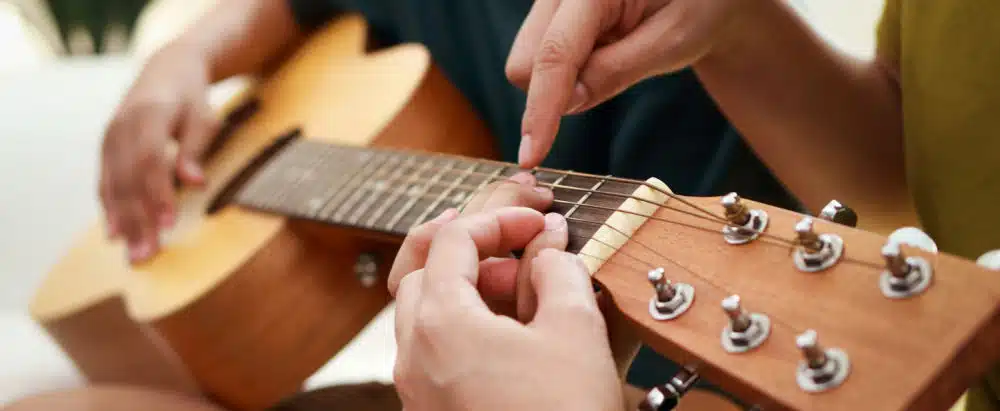
As a music tutor this is a question I get asked frequently by parents: should my child learn to play an instrument? In this weeks blog I will explore this question by using my own experience teaching children through the songs my younger pupils are playing at the moment. And yes there will be a spooky vibe this close to Halloween!!
Sense of Achievement
What is most rewarding as a music tutor is the observing the sense of achievement a child experiences when they learn a piece of music. This not only creates a bonding experience with the parent but also teaches perseverance. Practice will result in achievement and raise the self-esteem of the child. This can be demonstrated with a Celtic dance I am currently teaching my younger students. Below is a the melody line for the start of the song, which a simple repeated melody that is played by alternating the index and middle fingers:

Once this is learnt its very simple for the child to create movement and shape by adding open E bass notes with the thumb in bars 2 and 4:

The addition of an open string A note in Bars 1 and 3 can then enhance the melody and add additional harmony:

A layered approach to learning a tune and then enhancing with open bass notes is a wonderful confidence builder for children. Not only can the parent share the child’s satisfaction of being able to hear and play the tune, but then they are able to watch their confidence grow as the melody is enhanced and solidified by the open bass notes. Enhancing a child self-esteem is a very important component of their academic life, and indeed learning an instrument has been linked to improved study habits, enhanced critical thinking skills, better grades and the likelihood to stay in school and pursue further education.
Emotional Outlet
Childhood can be a very difficult period for children to express emotion. A child may appear emotionally withdrawn and unable to communicate what they feel. I am sure you have experienced this a lot as a parent. This is often where I see the benefit of learning an instrument can be for a child. Writing lyrics and composing a simple tune to play for their parents and friends is a wonderful emotional outlet and a means of self expression. Below is a small song I composed with one of my students. She was upset Christmas was over, but we could reflect on a great day she had during the holidays with her family as a way to overcome her sadness:
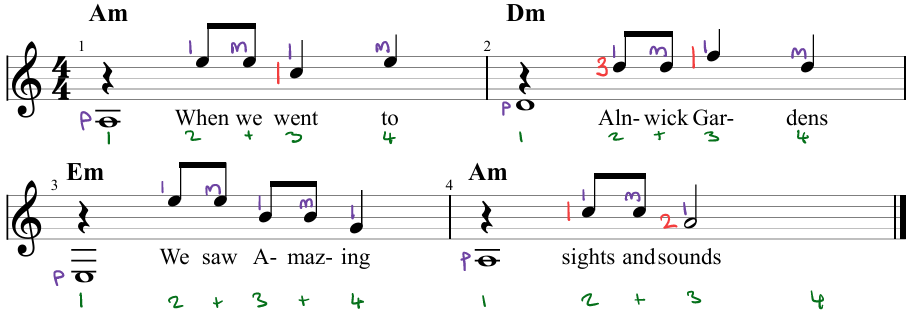
In this way she could relate her feelings and feel less emotionally isolated from her parents. By learning and playing music children become more sensitive and conscious of their feelings, which in turn leads to greater resilience and better emotional development. From a physiological perspective playing music also stimulates the brain to produce serotonin, which aids relaxation, boosts mood and helps relieve anxiety.
Developing social skills
I did promise a spooky vibe and here it is. I recently has a lesson with a child and their parents online. In fact it was really the whole family in the end, as his sister got curious and came over and joined in. Even the dog at one point! We were learning the ukulele and for Halloween it was of course the Adams Family. This is such a great group song as everyone can join in after the melody on beats 2 and 3 of bars 1-2, either clicking their fingers, clapping or even getting the dog to bark in time:
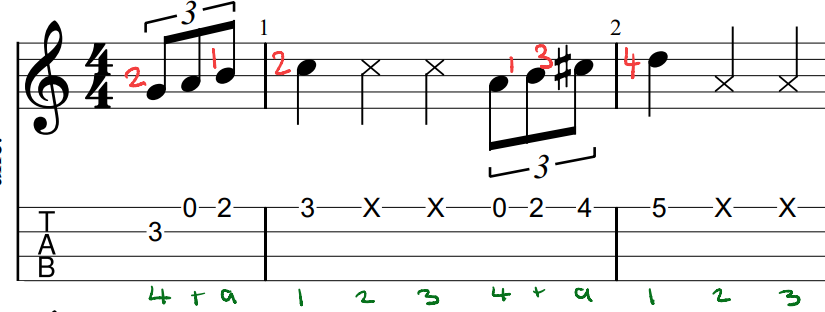
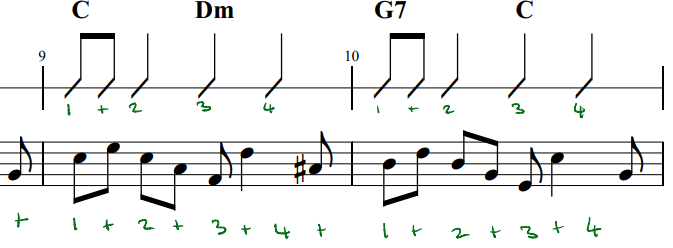
This for me highlights the social bonds that music can create, bringing a family together by playing and creating music. Group activities at school where children make music together is wonderful for developing social skills and team work, as children learn cooperation, to share and compromise. More importantly they develop new friendships by working together as part of a larger process rather than as individuals towards a lone goal. This was highlighted during my lesson when the child was able to strum his ukulele to accompany his father on the guitar. Or was it the dog playing…..
So should my child learn to play an instrument? For the Parent the answer is yes. Learning an instrument boosts the self-esteem and confidence of the child, providing a much needed emotional outlet during very difficult years and also enhancing social skills, teamwork and friendships that can last a lifetime. Now somebody give that dog a recording contract