

For this blog I am approaching a very contentious issue: Do I need a music tutor or an app? With the rise of the internet it seems like every second advert on-line promises is for an app that provides instant success. They all follow the same formula: a student struggles to play an instrument, then 30 seconds later with app are playing fluently. A click then brings up the cost for a series of learning modules that seems very cheap compared to the cost of lessons from a music tutor. So the dilemma: am I better investing my time and money in a music tutor? Or will an App that sounds too good to be true actually turn out to sound any good at all? Please read on
Will an app improve me as a musician?
When developing musicianship a difficult challenge for a music tutor is having children read music from the stave. This is where an app can prove extremely useful, by using a fun and accessible format to reinforce note reading. An app I often use is Flash note Derby. The notes I want the child to learn are selected and then presented as a series of flash cards:
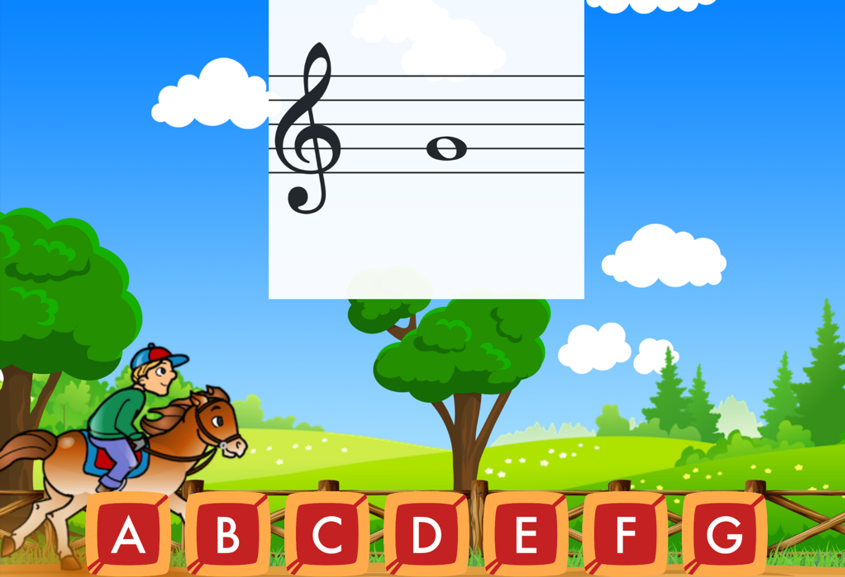
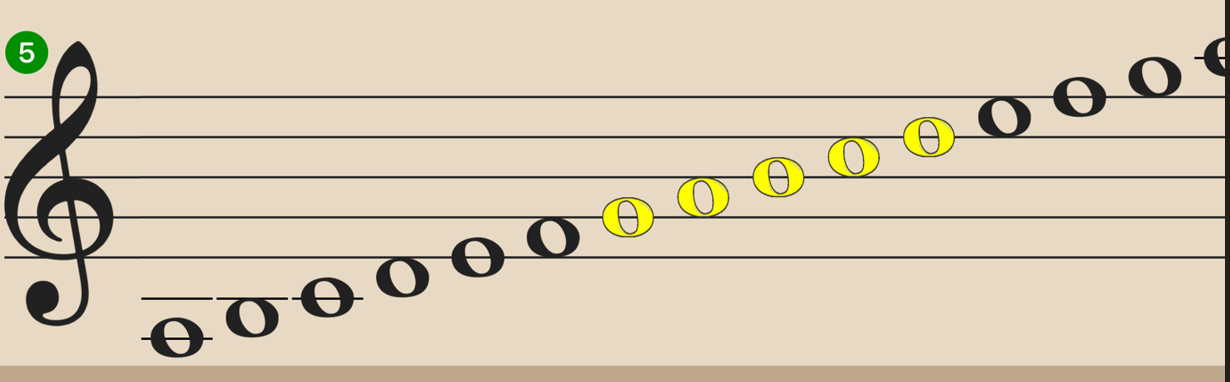
The choice of note is selected from the screen and there is the option to review and correct any mistakes at the end of the session. While being wonderfully useful it does not mean the tutor is made redundant in the process. When incorporated into the lesson the app becomes an effective teaching tool. The tutor can ask the pupil to play back the correct note on the guitar to reinforce where the note is on the fretboard. Also when teaching a tune I can test the student on the notes that are in the tune and make the learning process that much quicker:
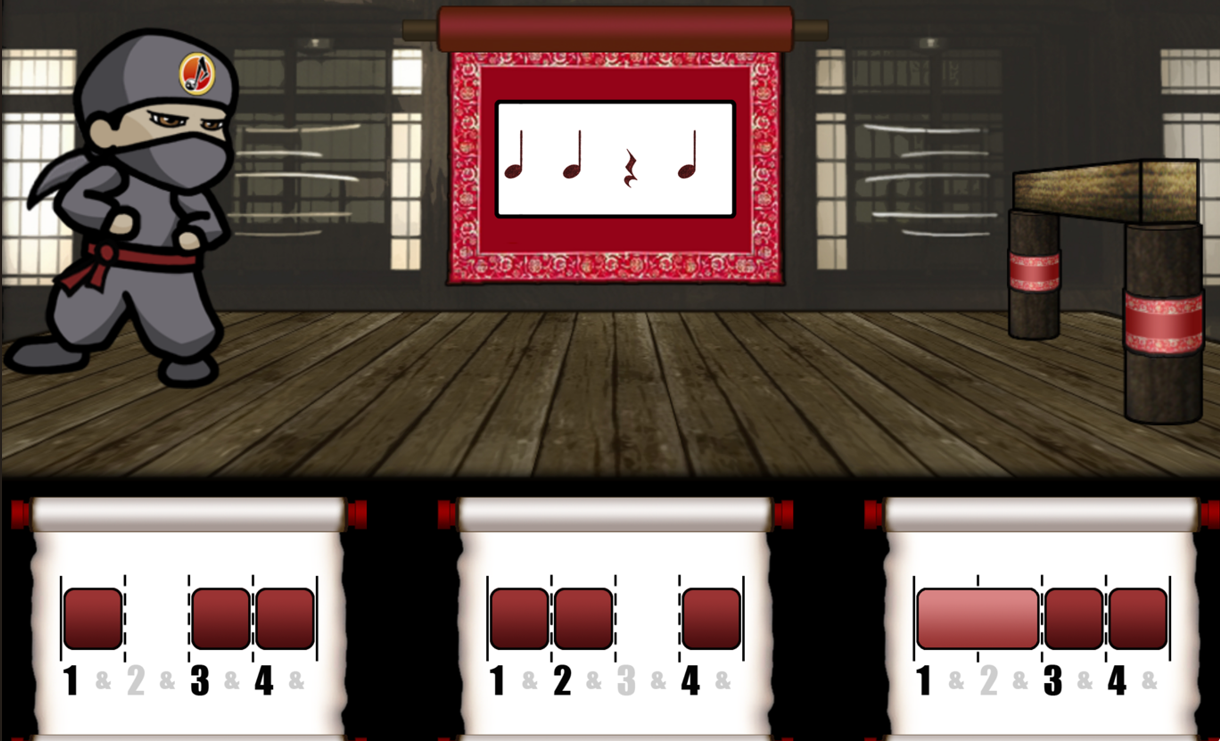
Apps are also an effective way to teach a child rhythm and note values. Ningenius achieves this by presenting a rhythm and then 3 options to chose from, the correct one breaking the bar and the wrong one resulting in a nasty headache! Again the teacher can bring the app to life by asking the student to not only recognize the rhythm but also strum it back on the guitar. The teacher can then chose a chord that the student has learned to play the rhythm back, and then use these examples to create their own rhythm:
The app itself can improve the student as a musician but it is the tutor that makes that learning both applicable and relevant to what the pupil is learning.
Will an App improve the weaker areas of my playing?
I have found that apps are great at showing you what to do, but will not focus on the weaker areas of your playing. It is a one size fits all approach, in that once a concept is introduced it assumed learnt and then moved on. This is often to a harder concept which leaves the pupil struggling to learn what has previously been taught. For example below is the intro and verse lick from Smoke on the Water, a common way to introduce beginner students to power chords on the electric guitar:
intro
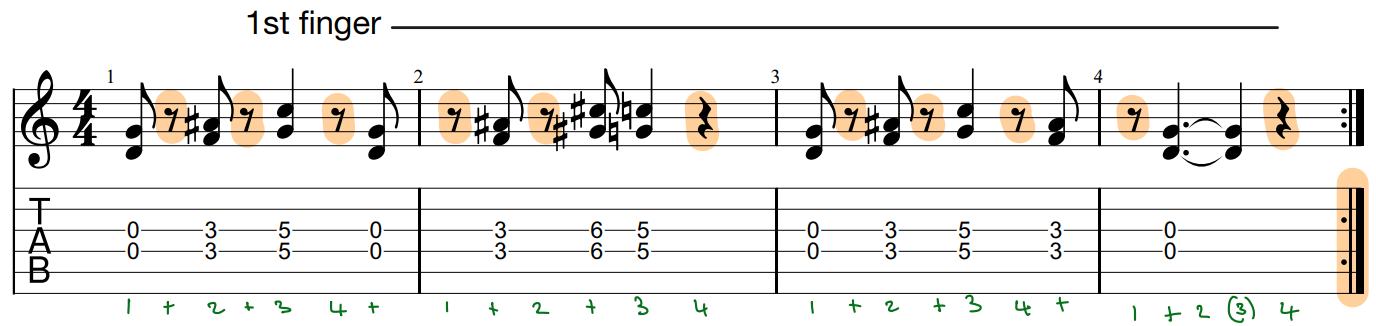
verse
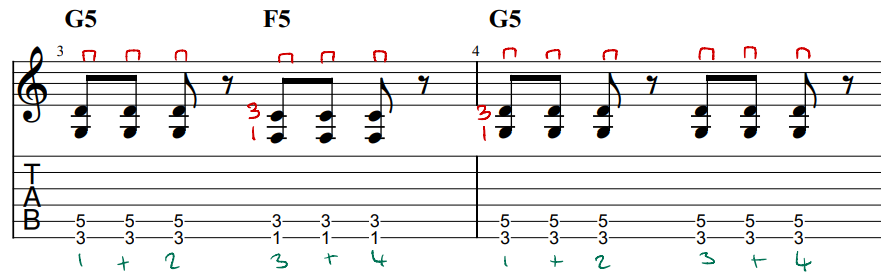
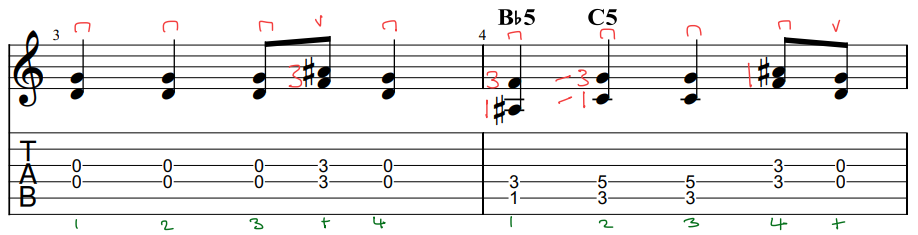
The pupil I was teaching had difficulty learning these power chord shapes. Having observed their playing I was able to address this weakness by introducing a phrase from Money for Nothing which combines both shapes into one lick:
This was further reinforced by merging both the verse lick for Smoke on the Water with Money for Nothing to create a practice exercise called Money for Smokey Water. This not only strengthens holding the power chord shape but also moving the shape both down and then up the guitar neck on the 6th and 5th strings. Notice how the descending progression in b.1 uses rests to define the lick while the ascending chords in b.2 are sustained:
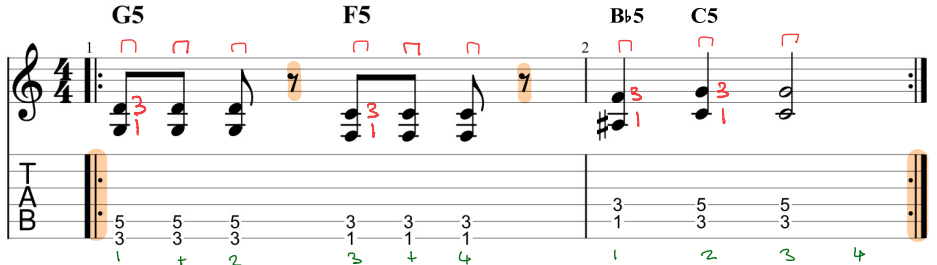
It is this innovation and to a certain extent outside the box thinking that really helped my pupil learn and develop his power chord playing. All pupils are different, so having a tutor observe, identify and then develop a weakness in a players technique is something an app cannot do.
Will an App improve my playing technique?
While an app may introduce a new technique into a students playing, how this technique is advanced then becomes fundamental to how effective it is learnt by the pupil. As stated earlier I find in my experience that apps move far too rapidly through the development of techniques that in reality need to be gradually progressed. The example below is taken from a prelude on the classical guitar which assigns the top 3 strings of the guitar to the index, middle and ring fingers, while the thumb plays the bass notes on strings 5 and 6:
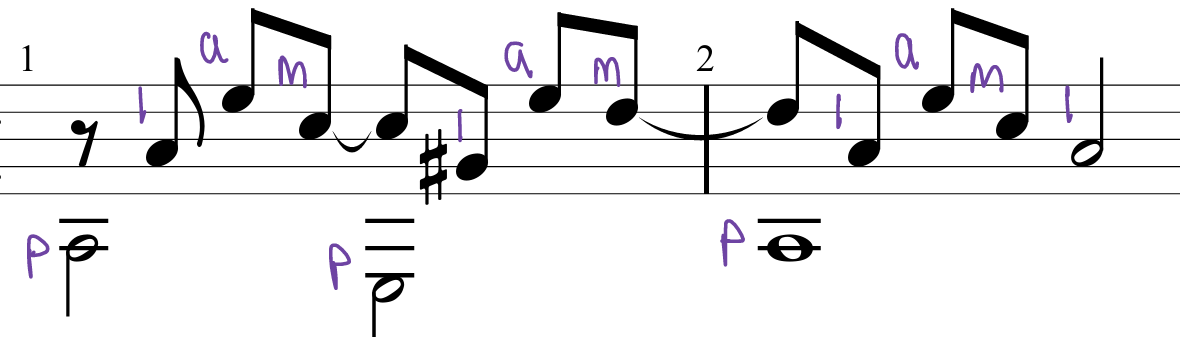
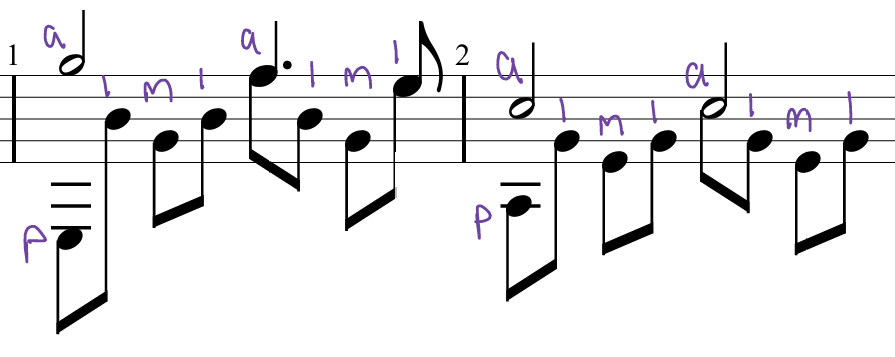
This technique is used to develop right hand awareness and is a difficult skill to master for a pupil. An app would assume that this is learnt and move onto more complicated finger patterns, while an experienced music tutor would know that this skill has to be gradually developed. A follow up passage from a song titled Autumn Leaves is highlighted below whereby the right hand pattern is moved to the inside strings in b.2, improving orientation and confidence in right hand picking:
So do I need a music tutor or an App? An app is a wonderful way to introduce children to dull musical concepts such as note reading, understanding note values and rhythm creation. Indeed an app can also take you through a series of learning modules that introduces musical techniques at a low price compared to individual lessons. But a music tutor will respect your individuality and use their experience and expertise to bring these concepts to life, observe your weaknesses and develop your playing technique beyond the blanket approach that an app will offer.